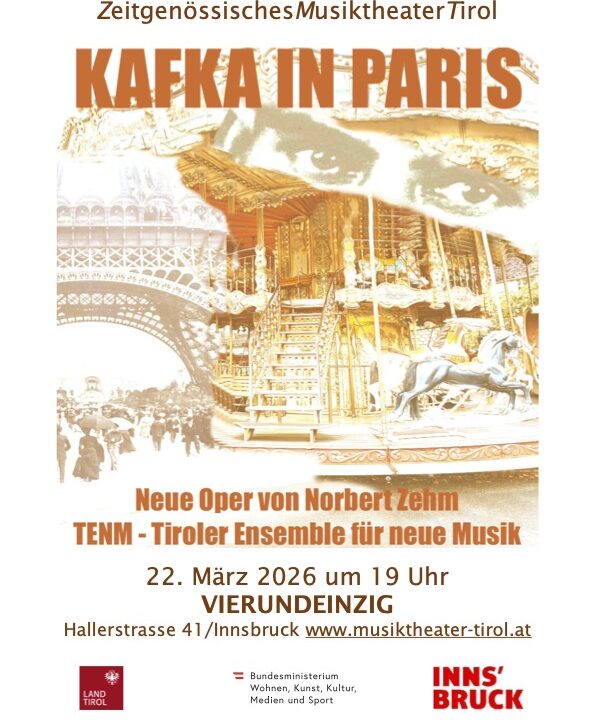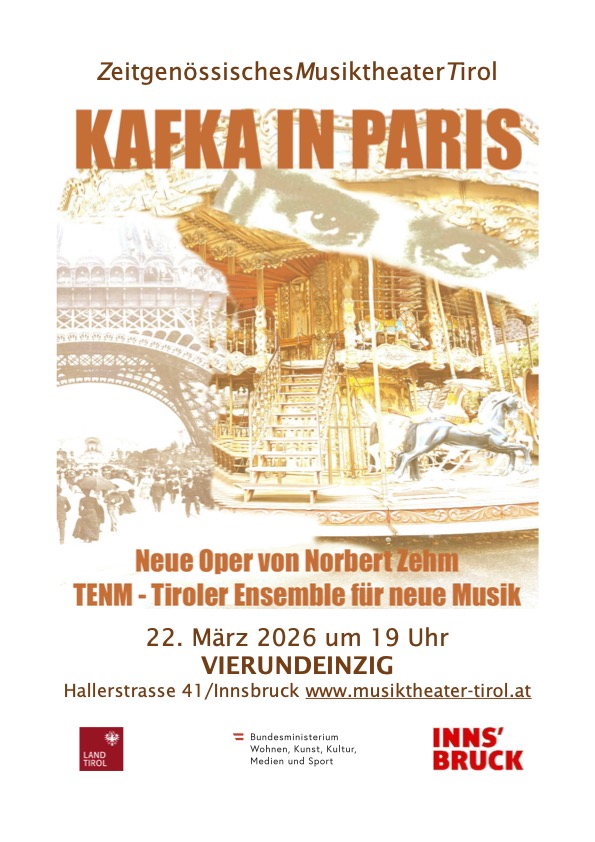
Arno Raunig, opera “Kafka in Paris”
October 1, 2026Arno Raunig as Producer and Soloist
"Il Pomo d'Oro"
Austrian Premiere
Revival of “Il Pomo d’Oro” in Vienna
The Triumph of Arno Raunig
1 April 1989
Vienna · Mozartsaal, Wiener Konzerthaus
Exactly 321 years after its world premiere (1668),
the Austrian countertenor and baroque enthusiast
Arno Raunig brought Marc’Antonio Cesti’s monumental
opera Il Pomo d’Oro (“The Golden Apple”) back to life –
the first performance in modern times.
It was a concert staging: the first complete evening presentation
of the opera since the 17th century and the first modern Viennese
production (prepared by Mag. Heinz Prammer) of this masterpiece,
organised by the Wiener Georg Friedrich Händel Verein
(founded by Raunig himself in 1986).
Raunig wore several hats at once:
Producer
Stage director of the concert version
Soloist in the role of Aurinda – the unhappily
enamoured princess, whose scene became the climax and greatest
triumph of the evening.
He assembled an outstanding ensemble of European baroque specialists,
an excellent young cast (16 soloists, including singers
who are now famous, such as Kammersängerin Angelika Kirchschlager,
Freda McNair and Manfred Equiluz), the orchestra of the Wiener
G.F. Händel-Verein, Ensemble Wien Barock (led by José Vázquez)
playing on period instruments, and the choir of the Vienna University
of Economics and Business.
Musical preparation and overall direction were in the hands of
Mag. Heinz Prammer, with expressive gestures that
held the entire ensemble together.
The Continuo Ensemble
Brigitte Zaczek · theorbo
Wolfgang Capek · positiv organ
Michael Gailit · harpsichord
José Vázquez · viola da gamba,
primus inter pares
The event was sold out and became a sensation
in the music world – despite the lack of programme booklets
containing the libretto text.
It was precisely this Raunig production that returned
Il Pomo d’Oro to the active repertoire and paved the way
for all subsequent revivals.
Incidentally: only a few months later (June 1989), another Viennese
team (Chor und Orchester Spectaculum under Gerhard Kramer) presented
its own version, which leaned heavily on Raunig’s concept and even
partly on the same personnel.
The true pioneer who rescued the opera from more than two centuries
of oblivion, however, remains
Arno Raunig.
It was his personal triumph – and one of the boldest baroque
projects in late-20th-century Austria.
Revival of “Il Pomo d’Oro” in Vienna
The Triumph of Arno Raunig
1 April 1989
Vienna · Mozartsaal, Wiener Konzerthaus
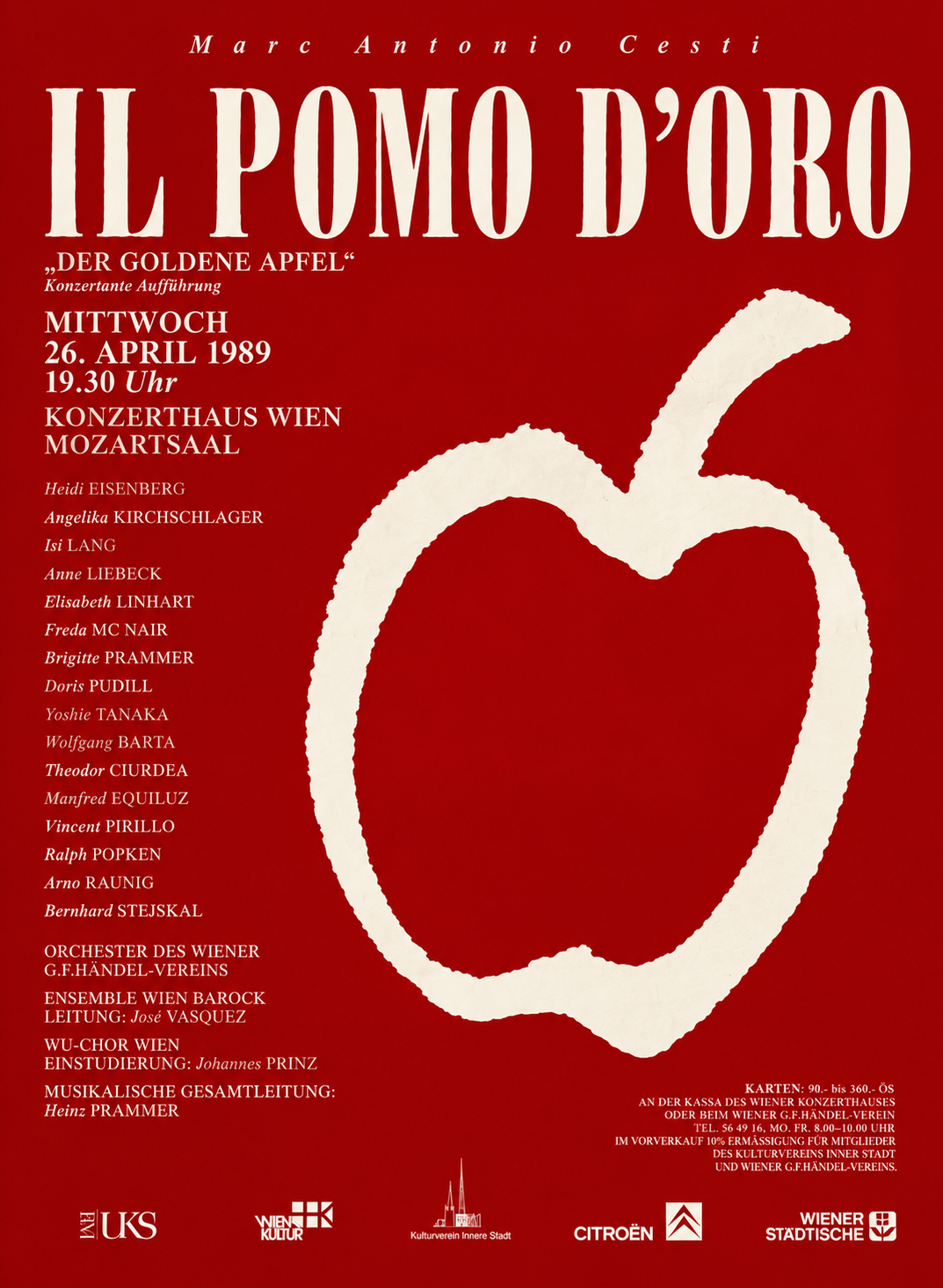
Exactly 321 years after its world premiere (1668), the Austrian countertenor and baroque enthusiast Arno Raunig brought Marc’Antonio Cesti’s monumental opera Il Pomo d’Oro (“The Golden Apple”) back to life – the first performance in modern times.
It was a concert staging: the first complete evening presentation of the opera since the 17th century and the first modern Viennese production (prepared by Mag. Heinz Prammer) of this masterpiece, organised by the Wiener Georg Friedrich Händel Verein (founded by Raunig himself in 1986).
Raunig wore several hats at once:
Producer
Stage director of the concert version
Soloist in the role of Aurinda – the unhappily enamoured princess, whose scene became the climax and greatest triumph of the evening.
He assembled an outstanding ensemble of European baroque specialists, an excellent young cast (16 soloists, including singers who are now famous, such as Kammersängerin Angelika Kirchschlager, Freda McNair and Manfred Equiluz), the orchestra of the Wiener G.F. Händel-Verein, Ensemble Wien Barock (led by José Vázquez) playing on period instruments, and the choir of the Vienna University of Economics and Business.
Musical preparation and overall direction were in the hands of Mag. Heinz Prammer, with expressive gestures that held the entire ensemble together.
The Continuo Ensemble
Brigitte Zaczek · theorbo
Wolfgang Capek · positiv organ
Michael Gailit · harpsichord
José Vázquez · viola da gamba,
primus inter pares
The event was sold out and became a sensation in the music world – despite the lack of programme booklets containing the libretto text.
It was precisely this Raunig production that returned Il Pomo d’Oro to the active repertoire and paved the way for all subsequent revivals.
Incidentally: only a few months later (June 1989), another Viennese team (Chor und Orchester Spectaculum under Gerhard Kramer) presented its own version, which leaned heavily on Raunig’s concept and even partly on the same personnel.
The true pioneer who rescued the opera from more than two centuries of oblivion, however, remains Arno Raunig.
It was his personal triumph – and one of the boldest baroque projects in late-20th-century Austria.
The Uniqueness of the Opera
Il Pomo d’Oro represents the pinnacle of baroque theatrical spectacle and is based on the myth of the Judgement of Paris (the choice of the golden apple for the most beautiful goddess).
Originally planned for the 1666 wedding of Emperor Leopold I to Margarethe Theresa of Spain, the premiere was postponed to the Empress’s 17th birthday in 1668. It was one of the most lavish (and most expensive) productions of the 17th century: roughly 10 hours long, with special effects and an orchestra of over 100 musicians in an open-air theatre seating 5,000. Stage designer Ludovico Ottavio Burnacini created no fewer than 24 scene changes; countless stage machines produced spectacular effects (shipwrecks, collapsing towers, etc.).
The opera served as tonal Habsburg dynasty propaganda and combined arias, duets and choruses in the distinctive Viennese baroque style. The 1989 concert version conveyed only the musical side – yet it impressed through the seamless transitions between recitatives and lyrical sections.
Curiosities about “Il Pomo d’Oro”
- The original 1668 production cost more than the construction of an entire palace wing: 100,000 gulden – an insane sum for the time.
- The performance was spread over two full days (12 and 14 July 1668), 67 scenes, 24 scenery changes.
- In the prologue alone, 27 “flying machines” (macchine volanti) were in the air simultaneously – more than in any other 17th-century theatre work.
- Over 100 musicians in the pit, up to 300 people on stage at once (singers, dancers, extras, machines).
- The golden apple that Paris finally hands to Venus was made of solid gold and set with precious stones – a gift from the Emperor to his 15-year-old bride.
The 1989 Revival by Arno Raunig
- The concert version showed only one “facet” of the original spectacle, but it was more than enough to admire the baroque dramaturgy with its fluid transitions between recitative and aria.
- Start: 7:30 p.m.; ticket prices 80–305 Austrian schillings, available at the Konzerthaus box office and from the City of Vienna cultural office.
- It was the Austrian premiere of a Cesti opera led by Arno Raunig – his first major Cesti project.
Full Cast of the Performance
- Eva Bátori – Venus
- Heidi Eisenberg
- Angelika Kirchschlager
- Isi Lang
- Anne Liebeck
- Elisabeth Linhart – Juno
- Freda McNair – Pallas Athene
- Brigitte Prammer
- Doris Pudill – Proserpina
- Yoshi Tanaka
- Wolfgang Barta
- Theodor Ciurdea – Pluto
- Manfred Equiluz
- Vincent Pirillo
- Ralph Popken – Mercurio
- Arno Raunig (producer and soloist) – Aurinda (and other roles)
- Bernhard Stejskal
Orchestra: Orchester des Wiener G.F. Händel-Vereins
Ensemble Wien Barock, directed by José Vázquez
WU-Chor Wien (today G.F. Händel-Chor Wien), prepared by Johannes Prinz
Overall musical direction: Heinz Prammer
This production remains an everlasting triumph of authenticity and passion for forgotten heritage.
-
- Revival of “Il Pomo d’Oro” in Vienna: The Triumph of Arno Raunig
Austrian Premiere: January 26 April 1989, Vienna
Producer, Stage director of the concert version, Soloist | Antonio Cesti | Il Pomo d’Oro | Mozartsaal, Wiener Konzerthaus | Wien | Austria | AUA |